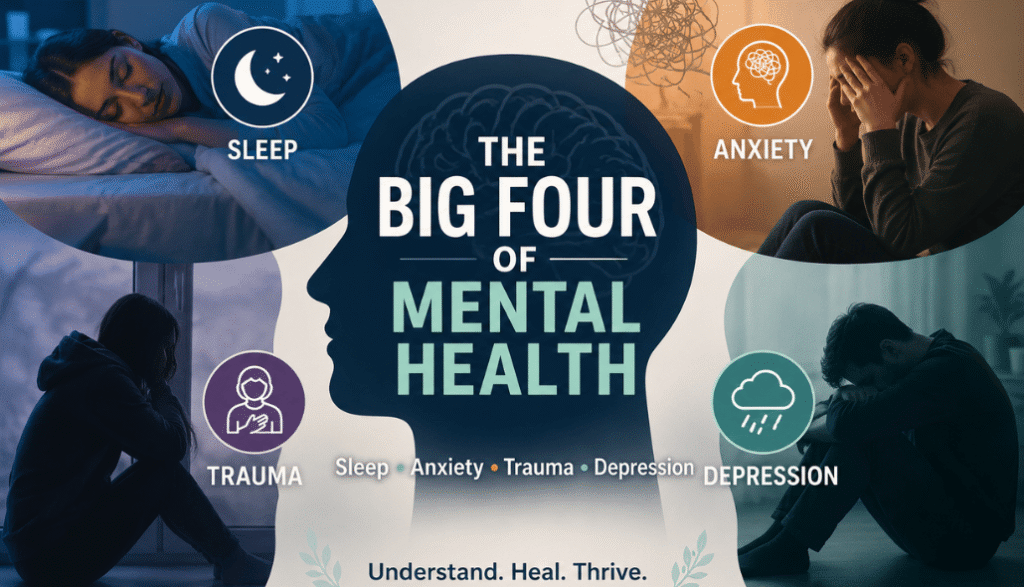
The Big Four of Mental Health: Sleep, Anxiety, Trauma, and Depression
Mental health is just as important as physical health, yet many people overlook the warning signs until they begin affecting daily life. Among the many factors that influence emotional well-being, sleep, anxiety, trauma, and depression are often referred to as the Big Four of Mental Health because they are deeply interconnected and can significantly impact your overall quality of life.
Understanding these four pillars can help you recognize when something isn’t right and encourage you to seek support before symptoms become overwhelming.
In this guide, we’ll explore each of these mental health concerns, their symptoms, and practical strategies to improve your emotional well-being.
Why Mental Health Matters
Mental health affects how we think, feel, behave, and handle life’s challenges. According to the World Health Organization (WHO), mental health conditions are among the leading causes of disability worldwide.
When one area of mental health suffers, it often influences the others. For example:
- Poor sleep can increase anxiety.
- Anxiety may contribute to depression.
- Trauma can lead to both anxiety and depression.
- Depression often disrupts healthy sleep patterns.
Recognizing these connections is the first step toward better mental wellness.
1. Sleep: The Foundation of Mental Health
Sleep is one of the most important factors for maintaining emotional and cognitive health. During sleep, the brain processes emotions, stores memories, and restores energy.
Signs of Poor Sleep
- Difficulty falling asleep
- Waking frequently during the night
- Feeling tired despite adequate sleep
- Difficulty concentrating
- Irritability
Chronic sleep deprivation can worsen anxiety, increase stress hormones, and raise the risk of depression.
Tips for Better Sleep
- Maintain a consistent sleep schedule.
- Avoid screens at least one hour before bedtime.
- Limit caffeine late in the day.
- Keep your bedroom cool, dark, and quiet.
- Exercise regularly, but avoid intense workouts before bedtime.
Improving sleep is often one of the fastest ways to improve overall mental health.
2. Anxiety: When Worry Takes Over
Everyone experiences worry occasionally, but anxiety becomes a concern when it is persistent, excessive, and interferes with everyday life.
Anxiety disorders are among the most common mental health conditions worldwide.
Common Symptoms of Anxiety
- Constant worrying
- Restlessness
- Rapid heartbeat
- Sweating
- Muscle tension
- Trouble concentrating
- Difficulty sleeping
- Feeling on edge
Anxiety can affect relationships, work performance, and physical health if left untreated.
Managing Anxiety
Healthy coping strategies include:
- Deep breathing exercises
- Mindfulness meditation
- Regular physical activity
- Limiting caffeine and alcohol
- Talking with a trusted friend or mental health professional
Professional treatment such as cognitive behavioral therapy (CBT) and, when appropriate, medication can also be highly effective.
3. Trauma: The Lasting Impact of Difficult Experiences
Trauma is an emotional response to distressing or life-threatening events such as accidents, abuse, violence, natural disasters, or the loss of a loved one.
Not everyone responds to trauma in the same way, but unresolved trauma can affect mental and physical health for years.
Signs of Trauma
- Flashbacks
- Nightmares
- Avoiding reminders of the event
- Emotional numbness
- Hypervigilance
- Irritability
- Difficulty trusting others
- Trouble sleeping
Trauma may contribute to post-traumatic stress disorder (PTSD), anxiety disorders, and depression.
Healing from Trauma
Recovery often involves:
- Trauma-informed therapy
- Support groups
- Mindfulness practices
- Journaling
- Healthy routines
- Building supportive relationships
Healing takes time, and seeking professional help is a sign of strength-not weakness.
4. Depression: More Than Feeling Sad
Depression is a medical condition that affects mood, thoughts, and daily functioning. It goes beyond temporary sadness and can significantly interfere with work, relationships, and overall quality of life.
Symptoms of Depression
- Persistent sadness
- Loss of interest in favorite activities
- Fatigue
- Changes in appetite
- Weight changes
- Sleep problems
- Difficulty concentrating
- Feelings of worthlessness
- Hopelessness
If symptoms last for more than two weeks, it’s important to seek medical evaluation.
Treatment Options
Depression is highly treatable through:
- Psychotherapy
- Medication when appropriate
- Regular exercise
- Healthy nutrition
- Good sleep habits
- Social support
Early treatment often leads to better outcomes and improved quality of life.
How the Big Four Are Connected
These four mental health challenges rarely occur in isolation.
For example:
- Poor sleep increases stress hormones, making anxiety worse.
- Anxiety can make it difficult to fall asleep.
- Trauma often leads to nightmares and chronic anxiety.
- Depression frequently causes insomnia or excessive sleeping.
- Long-term sleep problems can increase the risk of depression.
Addressing one area often leads to improvements in the others.
When Should You Seek Professional Help?
Consider speaking with a healthcare provider if you experience:
- Symptoms lasting more than two weeks
- Difficulty performing daily activities
- Persistent sleep problems
- Panic attacks
- Severe anxiety
- Ongoing sadness
- Emotional distress after a traumatic event
- Thoughts of self-harm or suicide
If you or someone you know is experiencing thoughts of self-harm or suicide, seek immediate help by contacting emergency services or a suicide crisis hotline in your country.
Early intervention can prevent symptoms from becoming more severe and improve long-term mental health.
Lifestyle Habits That Support Mental Wellness
Small daily habits can make a meaningful difference in supporting mental health.
Prioritize These Healthy Habits
- Get 7-9 hours of quality sleep each night.
- Stay physically active most days of the week.
- Eat a balanced, nutrient-rich diet.
- Stay connected with family and friends.
- Practice mindfulness or meditation.
- Limit alcohol and avoid recreational drugs.
- Spend time outdoors whenever possible.
- Reach out for help when needed.
Consistency is more important than perfection.
The Big Four of Mental Health-sleep, anxiety, trauma, and depression-play a vital role in your emotional and physical well-being. These conditions are closely connected, and recognizing their symptoms early can make a significant difference in recovery and quality of life.
Remember, mental health challenges are common, and effective treatments are available. Whether you’re improving your sleep habits, learning to manage anxiety, healing from trauma, or seeking treatment for depression, every positive step contributes to better overall health.
Taking care of your mental health is one of the most important investments you can make in your future.
Frequently Asked Questions (FAQs)
Can poor sleep cause anxiety and depression?
Yes. Chronic sleep deprivation can increase stress, worsen anxiety symptoms, and raise the risk of developing depression.
Is trauma always linked to PTSD?
No. While trauma can lead to PTSD, many people recover without developing the disorder. Others may experience anxiety or depression instead.
When should I see a healthcare provider about mental health?
If symptoms persist for more than two weeks, interfere with daily life, or become overwhelming, it’s important to seek professional medical advice.
Can lifestyle changes improve mental health?
Healthy sleep, regular exercise, balanced nutrition, stress management, and social support can all contribute to better mental well-being, though some people may also benefit from professional treatment.
Take the First Step Toward Better Mental Health
Your mental health deserves the same attention as your physical health. If you’re experiencing persistent sleep issues, anxiety, trauma-related symptoms, or depression, don’t wait to seek support.
Contact Medcare today to learn more about your health, discuss your concerns with a healthcare professional, and take proactive steps toward a healthier, happier life.