Los Cuatro Grandes de la Salud Mental: Cómo el Sueño, la Ansiedad, el Trauma y la Depresión Moldean Su Bienestar
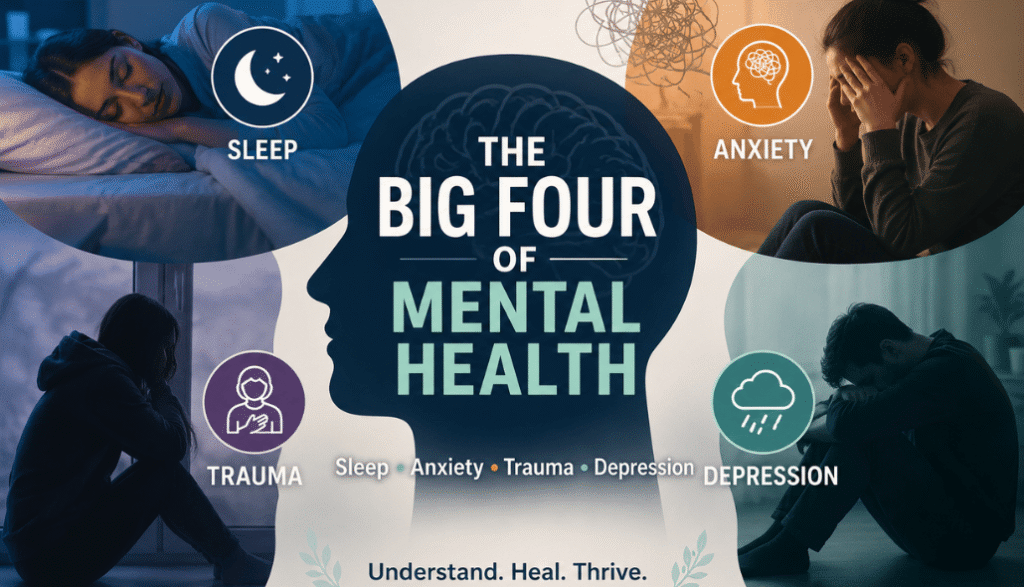
La salud mental es tan importante como la salud física; sin embargo, muchas personas pasan por alto las señales de advertencia hasta que estas comienzan a afectar su vida diaria. Entre los muchos factores que influyen en el bienestar emocional, el sueño, la ansiedad, el trauma y la depresión suelen conocerse como los Cuatro Grandes de la Salud Mental porque están profundamente interconectados y pueden afectar significativamente su calidad de vida en general.
Comprender estos cuatro pilares puede ayudarle a reconocer cuándo algo no está bien y animarle a buscar apoyo antes de que los síntomas se vuelvan abrumadores.
En esta guía, exploraremos cada uno de estos aspectos de la salud mental, sus síntomas y estrategias prácticas para mejorar su bienestar emocional.
Por Qué Importa la Salud Mental
La salud mental afecta la manera en que pensamos, sentimos, actuamos y enfrentamos los desafíos de la vida. Según la Organización Mundial de la Salud (OMS), los trastornos de salud mental se encuentran entre las principales causas de discapacidad a nivel mundial.
Cuando un área de la salud mental se ve afectada, a menudo influye en las demás. Por ejemplo:
- Un sueño deficiente puede aumentar la ansiedad.
- La ansiedad puede contribuir a la depresión.
- El trauma puede provocar tanto ansiedad como depresión.
- La depresión suele alterar los patrones saludables de sueño.
Reconocer estas conexiones es el primer paso hacia un mejor bienestar mental.
1. El Sueño: La Base de la Salud Mental
El sueño es uno de los factores más importantes para mantener la salud emocional y cognitiva. Durante el sueño, el cerebro procesa las emociones, almacena recuerdos y restaura la energía.
Señales de un Sueño Deficiente
- Dificultad para conciliar el sueño
- Despertar con frecuencia durante la noche
- Sentirse cansado a pesar de haber dormido lo suficiente
- Dificultad para concentrarse
- Irritabilidad
La privación crónica de sueño puede empeorar la ansiedad, aumentar las hormonas del estrés y elevar el riesgo de depresión.
Consejos para Dormir Mejor
- Mantenga un horario de sueño constante.
- Evite las pantallas al menos una hora antes de acostarse.
- Limite el consumo de cafeína en horas tardías del día.
- Mantenga su habitación fresca, oscura y silenciosa.
- Haga ejercicio con regularidad, pero evite entrenamientos intensos antes de dormir.
Mejorar el sueño suele ser una de las formas más rápidas de mejorar la salud mental en general.
2. La Ansiedad: Cuando la Preocupación Toma el Control
Todas las personas experimentan preocupación ocasionalmente, pero la ansiedad se convierte en un motivo de atención cuando es persistente, excesiva e interfiere con la vida cotidiana.
Los trastornos de ansiedad se encuentran entre los trastornos de salud mental más comunes a nivel mundial.
Síntomas Comunes de la Ansiedad
- Preocupación constante
- Inquietud
- Latidos cardíacos acelerados
- Sudoración
- Tensión muscular
- Dificultad para concentrarse
- Dificultad para dormir
- Sensación de estar "al límite"
Si no se trata, la ansiedad puede afectar las relaciones, el desempeño laboral y la salud física.
Cómo Controlar la Ansiedad
Las estrategias saludables de afrontamiento incluyen:
- Ejercicios de respiración profunda
- Meditación de atención plena
- Actividad física regular
- Limitar el consumo de cafeína y alcohol
- Hablar con un amigo de confianza o un profesional de la salud mental
El tratamiento profesional, como la terapia cognitivo-conductual (TCC) y, cuando sea apropiado, los medicamentos, también puede ser muy eficaz.
3. El Trauma: El Impacto Duradero de las Experiencias Difíciles
El trauma es una respuesta emocional a eventos angustiantes o que ponen en riesgo la vida, como accidentes, abuso, violencia, desastres naturales o la pérdida de un ser querido.
No todas las personas responden al trauma de la misma manera, pero el trauma no resuelto puede afectar la salud mental y física durante años.
Señales de Trauma
- Flashbacks
- Pesadillas
- Evitar recordatorios del evento
- Entumecimiento emocional
- Hipervigilancia
- Irritabilidad
- Dificultad para confiar en los demás
- Dificultad para dormir
El trauma puede contribuir al trastorno de estrés postraumático (TEPT), a los trastornos de ansiedad y a la depresión.
Sanar del Trauma
La recuperación suele incluir:
- Terapia informada sobre el trauma
- Grupos de apoyo
- Prácticas de atención plena
- Escribir un diario
- Rutinas saludables
- Construir relaciones de apoyo
Sanar toma tiempo, y buscar ayuda profesional es una muestra de fortaleza, no de debilidad.
4. La Depresión: Más que Sentirse Triste
La depresión es una condición médica que afecta el estado de ánimo, los pensamientos y el funcionamiento diario. Va más allá de la tristeza temporal y puede interferir significativamente con el trabajo, las relaciones y la calidad de vida en general.
Síntomas de la Depresión
- Tristeza persistente
- Pérdida de interés en actividades favoritas
- Fatiga
- Cambios en el apetito
- Cambios de peso
- Problemas de sueño
- Dificultad para concentrarse
- Sentimientos de inutilidad
- Desesperanza
Si los síntomas duran más de dos semanas, es importante buscar una evaluación médica.
Opciones de Tratamiento
La depresión es altamente tratable mediante:
- Psicoterapia
- Medicamentos, cuando sea apropiado
- Ejercicio regular
- Nutrición saludable
- Buenos hábitos de sueño
- Apoyo social
El tratamiento temprano suele conducir a mejores resultados y una mejor calidad de vida.
Cómo Están Conectados los Cuatro Grandes
Estos cuatro desafíos de salud mental rara vez ocurren de forma aislada.
Por ejemplo:
- Un sueño deficiente aumenta las hormonas del estrés, lo que empeora la ansiedad.
- La ansiedad puede dificultar conciliar el sueño.
- El trauma suele provocar pesadillas y ansiedad crónica
- La depresión frecuentemente causa insomnio o sueño excesivo.
- Los problemas de sueño a largo plazo pueden aumentar el riesgo de depresión.
Atender un área a menudo genera mejoras en las demás.
¿Cuándo Debe Buscar Ayuda Profesional?
Considere hablar con un proveedor de servicios de salud si experimenta:
- Síntomas que duran más de dos semanas
- Dificultad para realizar actividades diarias
- Problemas de sueño persistentes
- Ataques de pánico
- Ansiedad severa
- Tristeza continua
- Angustia emocional después de un evento traumático
- Pensamientos de autolesión o suicidio
Si usted o alguien que conoce está experimentando pensamientos de autolesión o suicidio, busque ayuda de inmediato contactando a los servicios de emergencia o a una línea de crisis de suicidio en su país.
La intervención temprana puede prevenir que los síntomas se agraven y mejorar la salud mental a largo plazo.
Hábitos de Estilo de Vida que Favorecen el Bienestar Mental
Los pequeños hábitos diarios pueden marcar una diferencia significativa en el apoyo a la salud mental.
Priorice Estos Hábitos Saludables
- Duerma de 7 a 9 horas de calidad cada noche.
- Manténgase físicamente activo la mayoría de los días de la semana.
- Siga una dieta equilibrada y rica en nutrientes.
- Manténgase en contacto con familiares y amigos.
- Practique la atención plena o la meditación.
- Limite el alcohol y evite las drogas recreativas.
- Pase tiempo al aire libre siempre que sea posible.
- Busque ayuda cuando la necesite.
La constancia es más importante que la perfección.
Los Cuatro Grandes de la Salud Mental —el sueño, la ansiedad, el trauma y la depresión— desempeñan un papel fundamental en su bienestar emocional y físico. Estas condiciones están estrechamente conectadas, y reconocer sus síntomas a tiempo puede marcar una diferencia significativa en la recuperación y la calidad de vida.
Recuerde que los desafíos de salud mental son comunes y que existen tratamientos eficaces disponibles. Ya sea que esté mejorando sus hábitos de sueño, aprendiendo a manejar la ansiedad, sanando de un trauma o buscando tratamiento para la depresión, cada paso positivo contribuye a una mejor salud en general.
Cuidar su salud mental es una de las inversiones más importantes que puede hacer para su futuro.
Preguntas Frecuentes (FAQs)
¿El sueño deficiente puede causar ansiedad y depresión?
Sí. La privación crónica de sueño puede aumentar el estrés, empeorar los síntomas de ansiedad y elevar el riesgo de desarrollar depresión.
¿El trauma siempre está relacionado con el TEPT?
No. Si bien el trauma puede provocar TEPT, muchas personas se recuperan sin desarrollar el trastorno. Otras pueden experimentar ansiedad o depresión en su lugar.
¿Cuándo debo consultar a un proveedor de servicios de salud sobre mi salud mental?
Si los síntomas persisten por más de dos semanas, interfieren con la vida diaria o se vuelven abrumadores, es importante buscar orientación médica profesional.
¿Los cambios en el estilo de vida pueden mejorar la salud mental?
Un sueño saludable, el ejercicio regular, una nutrición equilibrada, el manejo del estrés y el apoyo social pueden contribuir a un mejor bienestar mental, aunque algunas personas también pueden beneficiarse de un tratamiento profesional.
Dé el Primer Paso Hacia una Mejor Salud Mental
Su salud mental merece la misma atención que su salud física. Si está experimentando problemas persistentes de sueño, ansiedad, síntomas relacionados con el trauma o depresión, no espere para buscar apoyo.
Contacte a Medcare hoy mismo para conocer más sobre su salud, hablar sobre sus inquietudes con un profesional de la salud y dar pasos proactivos hacia una vida más saludable y feliz.