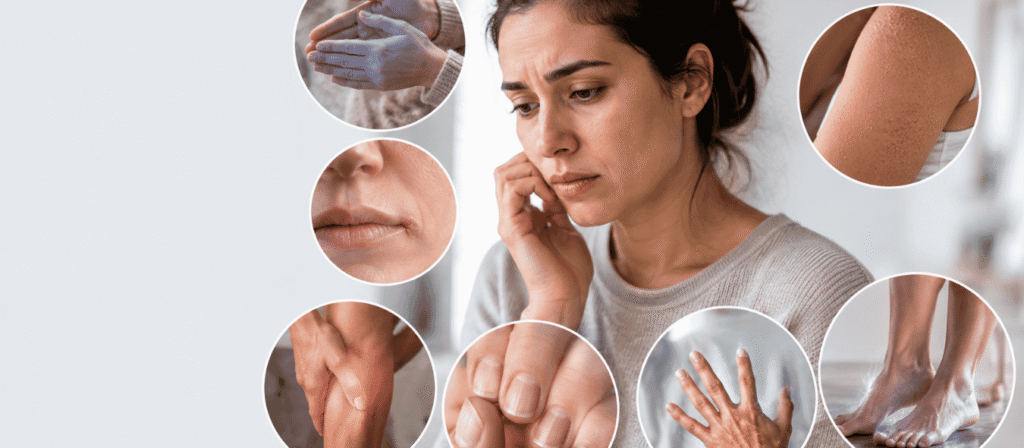
Your body often gives subtle clues when it’s lacking essential vitamins and minerals. While occasional symptoms may not always indicate a deficiency, persistent changes can be a sign that your body needs attention.
Recognizing these early warning signs can help you address nutritional deficiencies before they affect your overall health. In this guide, we’ll explore seven common signs of nutrient deficiencies, their possible causes, and when it’s time to consult a healthcare provider.
Important: These symptoms can have many causes and are not enough on their own to diagnose a vitamin or mineral deficiency. A healthcare professional can help determine the underlying cause through a medical evaluation and, when appropriate, blood tests.
1. Cold Hands and Feet
Frequently having cold hands and feet-even in a warm environment-may be linked to several underlying health conditions, including certain nutrient deficiencies.
Possible Causes
- Iron deficiency, which can contribute to anemia and reduced oxygen delivery throughout the body.
- Vitamin B12 deficiency, which may affect nerve function and red blood cell production.
- Poor circulation, thyroid disorders, or conditions such as Raynaud's phenomenon can also cause this symptom.
What You Can Do
- Include iron-rich foods like lean meats, beans, spinach, and fortified cereals.
- Eat vitamin B12-rich foods such as fish, eggs, dairy, and fortified products.
- Stay active and discuss persistent symptoms with your healthcare provider.
2. Hair Loss and Thinning
Hair naturally sheds every day, but excessive hair loss or noticeable thinning may signal a nutritional imbalance.
Nutrients That May Be Involved
- Iron
- Vitamin D
- Zinc
- Protein
- Biotin (although true biotin deficiency is uncommon)
Other common causes include hormonal changes, genetics, stress, certain medications, and thyroid disorders.
Tips for Healthier Hair
- Eat a balanced diet with adequate protein.
- Include foods rich in zinc, iron, and vitamin D.
- Avoid crash diets that may reduce nutrient intake.
- Seek medical advice if hair loss is sudden, severe, or ongoing.
3. Cracks at the Corners of Your Mouth
Painful cracks at the corners of the mouth (angular cheilitis) can result from irritation, fungal infections, or nutritional deficiencies.
Possible Nutrient Deficiencies
- Vitamin B2 (Riboflavin)
- Vitamin B6
- Vitamin B12
- Iron
Foods That Help
- Dairy products
- Eggs
- Leafy green vegetables
- Whole grains
- Lean meats
- Legumes
Persistent mouth cracks should be evaluated by a healthcare provider, especially if they don’t improve with proper care.
4. Muscle Cramps and Twitches
Occasional muscle cramps are common, especially after exercise. However, frequent cramps or muscle twitching may sometimes indicate inadequate intake of certain nutrients.
Nutrients Commonly Associated
- Magnesium
- Potassium
- Calcium
- Vitamin D
Dehydration, certain medications, nerve disorders, and intense physical activity can also contribute.
How to Reduce Muscle Cramps
- Stay well hydrated.
- Eat bananas, leafy greens, nuts, seeds, yogurt, and other nutrient-rich foods.
- Stretch regularly.
- Speak with your healthcare provider if symptoms are frequent or severe.
5. Ridged or Spoon-Shaped Fingernails
Your fingernails can reveal important clues about your overall health.
What They May Indicate
Spoon-shaped nails (koilonychia) may be associated with:
- Iron deficiency anemia
Ridged nails become more common with aging, but pronounced changes may sometimes be linked to:
- Nutritional deficiencies
- Skin conditions
- Other medical conditions
Support Nail Health
Focus on a balanced diet containing:
- Iron
- Protein
- Zinc
- B vitamins
Any sudden nail changes should be assessed by a healthcare professional.
6. Tingling in Your Hands and Feet
A persistent “pins and needles” sensation may occur when nerves are affected.
Possible Nutrient Deficiencies
- Vitamin B12
- Vitamin B6 (both deficiency and excess can affect nerves)
- Vitamin E
However, tingling may also result from diabetes, nerve compression, circulation problems, or neurological conditions.
What You Should Do
If tingling persists, don’t ignore it. Early evaluation can help identify the underlying cause and guide appropriate treatment.
7. Bumpy Skin on the Back of Your Arms
Small, rough bumps on the upper arms are often caused by keratosis pilaris, a common and harmless skin condition.
Although not always related to nutrition, some evidence suggests that vitamin A deficiency can contribute in certain cases. Dry skin and genetics are also common factors.
Skin-Friendly Nutrition
Support healthy skin with foods rich in:
- Vitamin A (sweet potatoes, carrots, spinach)
- Omega-3 fatty acids
- Vitamins C and E
- Plenty of water
Moisturizing regularly and using gentle exfoliation may also improve skin texture.
How to Prevent Nutritional Deficiencies
The best way to reduce your risk of vitamin and mineral deficiencies is through a healthy, balanced lifestyle.
Eat a Variety of Nutrient-Rich Foods
Include:
- Colorful fruits and vegetables
- Whole grains
- Lean proteins
- Healthy fats
- Dairy or fortified alternatives
Stay Hydrated
Proper hydration supports circulation, muscle function, and overall health.
Get Regular Checkups
Routine health screenings can help identify deficiencies early-especially if you’re experiencing persistent symptoms or have risk factors such as restrictive diets, digestive disorders, or certain medical conditions.
Don't Self-Diagnose
Taking high-dose supplements without medical guidance may not be beneficial and can sometimes be harmful. Your healthcare provider may recommend blood tests if a deficiency is suspected.
When Should You See a Doctor?
Seek medical evaluation if you experience:
- Persistent cold hands and feet
- Significant or unexplained hair loss
- Ongoing muscle cramps
- Frequent tingling or numbness
- Painful mouth cracks that don't heal
- Noticeable nail changes
- Symptoms that interfere with daily life
Many nutrient deficiencies are treatable once the underlying cause is identified.
Understanding how to recognize deficiencies in the body can help you pay attention to important health signals before they become more serious. Symptoms like cold hands and feet, hair loss, cracks at the corners of the mouth, muscle cramps, ridged or spoon-shaped nails, tingling in the hands and feet, and bumpy skin may sometimes be linked to nutritional deficiencies-but they can also have many other causes.
Rather than guessing, it’s best to seek professional medical advice for persistent symptoms. A balanced diet, healthy lifestyle, and regular medical checkups remain the most effective ways to support long-term health.
Take Charge of Your Health with Medcare
If you’re experiencing symptoms that may be related to a vitamin or mineral deficiency, Medcare is here to help. Our healthcare professionals can evaluate your symptoms, recommend appropriate testing when needed, and create a personalized treatment plan to help you feel your best.
Schedule your appointment with Medcare today and take the first step toward better health.