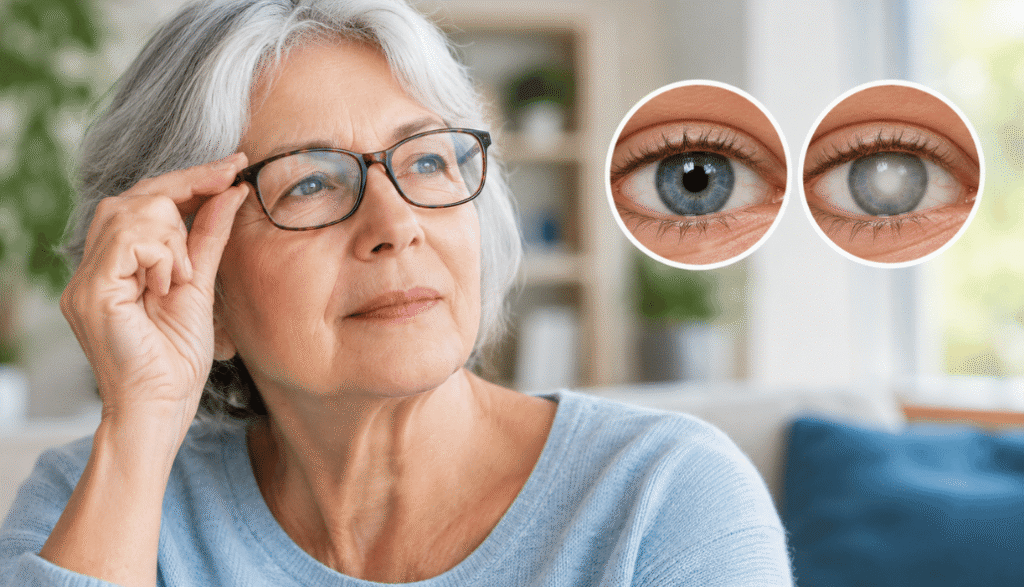
Cataracts are one of the common eye problems that happen as people get older. They can slowly make your vision look cloudy, not clear or harder to see. This can make things like reading, driving or seeing peoples faces harder to do.
The good news is that cataracts can usually be checked and fixed. Learning about cataract signs, why they happen, what makes them more likely and how they are treated can help you notice changes in your eyesight. It can also help you know when it is time to get your eyes checked.
What Is a Cataract?
A cataract happens when the clear lens inside the eye turns cloudy. The lens is responsible for focusing light onto the retina so that you can see clearly. When the lens becomes cloudy light might not go through well which can make it harder to see.
Cataracts often happen slowly so you might not realize there is a change at the beginning.. As time goes on your vision may get more and more unclear or, out of focus.
Cataracts are very common as people get older. There are other things that can cause them to form as well.
Common Cataract Symptoms
Cataract symptoms can vary from person to person and may develop slowly.
Some common signs include:
- Cloudy or blurry vision
- Difficulty seeing clearly at night
- Increased sensitivity to bright lights or glare
- Halos around lights
- Colors appearing faded or less vibrant
- Frequent changes in eyeglass prescriptions
- Difficulty reading or performing close-up tasks
- Double vision in one eye
Some people may initially notice that their vision seems slightly blurred or that headlights and other bright lights are more uncomfortable at night.
If you experience new or worsening vision changes, an eye care professional can help determine the cause.
What Causes Cataracts?
Aging is the common factor linked to cataract growth. As the lens in the eye changes with time the proteins and other parts inside the lens can change, causing the lens to become cloudy.
However cataracts can also be connected to reasons including:
Age-Related Changes
Cataracts become more common as people get older. Many older adults experience some degree of lens clouding as part of the aging process.
Certain Health Conditions
Some medical conditions may increase the risk of developing cataracts. Your healthcare professional can help you understand how your overall health may affect your eye health.
Eye Injury or Surgery
Previous eye injuries or certain eye surgeries may be associated with an increased risk of cataracts.
Long-Term Medication Use
Some medications, including certain corticosteroids, may increase cataract risk when used for extended periods. Never stop a prescribed medication without speaking with your healthcare professional.
Sun Exposure and Lifestyle Factors
Long-term exposure to ultraviolet (UV) radiation and smoking are among factors associated with cataract risk.
How Are Cataracts Diagnosed?
An eye care professional can evaluate your vision and examine the structures of your eyes to determine whether cataracts may be affecting your sight.
An eye examination may include:
- Visual acuity testing
- Eye pressure measurement
- Examination of the lens and other eye structures
- A dilated eye examination when appropriate
- Questions about your symptoms and changes in vision
A comprehensive eye examination can also help identify other conditions that may affect vision.
How Are Cataracts Treated?
Treatment depends on how much the cataract affects your daily life and vision.
Early Cataracts
When cataracts are mild, some people may be able to manage changes with updated glasses, improved lighting, magnification, or other practical adjustments.
Regular eye examinations can help monitor changes over time.
Cataract Surgery
When a cataract blocks your life a lot an eye doctor might talk about cataract surgery.
During cataract surgery the cloudy natural lens is taken out. Swapped for an artificial lens known as an intraocular lens or IOL.
Cataract surgery is an operation but whether cataract surgery is right for you depends on your eye health, the symptoms you feel and your medical history. An eye surgeon can explain what cataract surgery can do, the risks and the lens choices that are available.
Can Cataracts Be Prevented?
There is no guaranteed way to prevent every cataract, particularly those associated with aging. However, protecting your overall eye health may help reduce certain risk factors.
Consider:
- Wearing sunglasses that provide UV protection when outdoors
- Avoiding smoking
- Managing health conditions with guidance from your healthcare professional
- Eating a balanced diet rich in fruits and vegetables
- Protecting your eyes from injuries
- Having regular eye examinations
These habits support overall eye health but do not guarantee that cataracts will not develop.
When Should You See an Eye Care Professional?
Don’t ignore changes in your vision, especially if they interfere with everyday activities.
Consider scheduling an eye examination if you notice:
- Increasingly blurry or cloudy vision
- Difficulty seeing at night
- More glare from headlights or bright lights
- Changes in color perception
- Difficulty reading despite using your usual glasses
- Vision changes that affect driving or daily activities
Sudden vision loss, severe eye pain, flashes of light, a sudden increase in floaters, or a curtain-like shadow over your vision requires prompt medical attention.
Cataracts and Healthy Aging
Vision changes are not always caused by cataracts. Other eye conditions can produce symptoms so it is important to have a professional evaluation. For adults keeping up with regular eye care helps them stay independent and safely handle everyday tasks. If you notice vision changes speak with an eye care professional to see if an eye exam is right, for you.