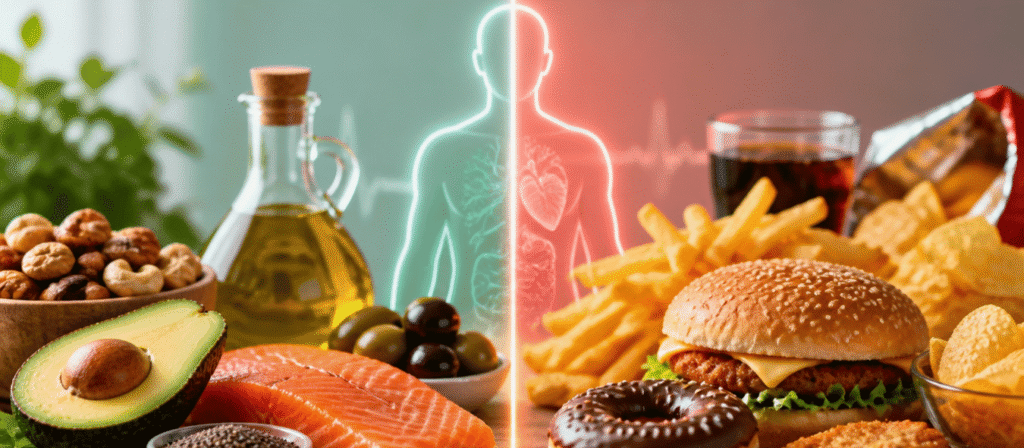
No toda la grasa es igual: la verdad sobre la grasa dietética
Durante años, la grasa fue considerada la enemiga de la buena salud. Muchas personas evitaban los alimentos grasos en un esfuerzo por bajar de peso, reducir el colesterol y disminuir su riesgo de enfermedad cardíaca. Sin embargo, la investigación moderna ha revelado una verdad mucho más importante: no toda la grasa es igual.
De hecho, algunas grasas son esenciales para su cuerpo y pueden ayudar a mejorar la salud del corazón, la función cerebral y el bienestar en general. Entender los diferentes tipos de grasas puede ayudarle a tomar decisiones alimenticias más saludables y favorecer su salud a largo plazo.
¿Por qué su cuerpo necesita grasa?
La grasa es uno de los tres macronutrientes principales, junto con los carbohidratos y las proteínas. Desempeña varias funciones vitales en el cuerpo, entre ellas:
- Aportar energía
- Favorecer el crecimiento celular
- Proteger los órganos
- Ayudar a absorber las vitaminas A, D, E y K
- Favorecer la producción de hormonas
- Mantener el funcionamiento del cerebro y del sistema nervioso
La clave está en elegir los tipos correctos de grasa, al mismo tiempo que se limitan aquellas que pueden dañar su salud.
Los diferentes tipos de grasa dietética
1. Grasas insaturadas: las "grasas saludables"
Las grasas insaturadas generalmente se consideran beneficiosas para la salud. Pueden ayudar a reducir los niveles de colesterol malo, disminuir la inflamación y favorecer la salud del corazón.
Grasas monoinsaturadas
Se sabe que estas grasas mejoran los niveles de colesterol y reducen el riesgo de enfermedad cardiovascular.
Entre sus fuentes se incluyen:
- Aceite de oliva
- Aguacates
- Almendras
- Anacardos (nueces de la India)
- Cacahuates
- Aceite de ajonjolí (sésamo)
Grasas poliinsaturadas
Estas incluyen ácidos grasos esenciales como los ácidos grasos Omega-3 y Omega-6, los cuales el cuerpo no puede producir por sí mismo.
Entre sus fuentes se incluyen:
- Pescados grasos (salmón, sardinas, macarela)
- Nueces de Castilla
- Semillas de linaza
- Semillas de chía
- Semillas de girasol
Beneficios de las grasas insaturadas saludables:
- Favorecer la salud del corazón
- Mejorar la función cerebral
- Reducir la inflamación
- Ayudar a mantener niveles de colesterol saludables
Grasa saturada: no siempre es la villana
Las grasas saturadas se han asociado desde hace mucho tiempo con la enfermedad cardíaca, pero la investigación actual sugiere que esta relación es más compleja de lo que antes se creía.
Las grasas saturadas son sólidas a temperatura ambiente y se encuentran comúnmente en:
- Mantequilla
- Queso
- Leche entera
- Carne roja
- Aceite de coco
- Aceite de palma
Si bien la grasa saturada puede formar parte de una dieta equilibrada, su consumo excesivo puede aumentar los niveles de colesterol LDL ("malo") en algunas personas.
¿Cuánta grasa saturada es demasiada?
La mayoría de las organizaciones de salud recomiendan limitar la grasa saturada a menos del 10 % de las calorías diarias totales. En lugar de evitarla por completo, enfóquese en la moderación y elija grasas más saludables siempre que sea posible.
Grasas trans: la grasa que debe evitar
De todos los tipos de grasa dietética, las grasas trans se consideran las más dañinas.
Las grasas trans suelen crearse mediante procesamiento industrial para mejorar la vida útil y la textura de los alimentos procesados.
Entre sus fuentes comunes se incluyen:
- Bocadillos empacados
- Comida rápida frita
- Comida rápida frita
- Margarinas que contienen aceites parcialmente hidrogenados
¿Por qué son dañinas las grasas trans?
Las investigaciones muestran que las grasas trans pueden:
- Aumentar el colesterol LDL malo
- Reducir el colesterol HDL bueno
- Aumentar la inflamación
- Aumentar el riesgo de enfermedad cardíaca y accidente cerebrovascular
Muchos países han restringido o prohibido las grasas trans artificiales, pero sigue siendo importante revisar cuidadosamente las etiquetas de los alimentos.
La grasa y el aumento de peso: lo que la gente suele entender mal
Una de las ideas equivocadas más comunes es pensar que consumir grasa provoca automáticamente un aumento de peso.
La realidad es que el exceso de calorías provenientes de cualquier fuente —grasa, carbohidratos o proteína— puede contribuir al aumento de peso.
De hecho, las grasas saludables pueden ayudar a controlar el peso porque:
- Aumentan la sensación de saciedad
- Reducen los antojos poco saludables
- Estabilizan los niveles de energía
- Favorecen niveles equilibrados de azúcar en la sangre
Por ejemplo, agregar aguacate, nueces o aceite de oliva a las comidas puede ayudarle a sentirse satisfecho por más tiempo que al consumir alimentos bajos en grasa altamente procesados.
Opciones de grasas saludables para el día a día
Elegir grasas más saludables no tiene que ser complicado.
Cambios inteligentes que puede hacer hoy mismo
En lugar de:
- Mantequilla → Use aceite de oliva
- Papas fritas de bolsa → Elija nueces o semillas
- Bocadillos procesados → Aguacate fresco o hummus
- Alimentos fritos → Opciones a la parrilla u horneadas
- Carnes procesadas grasosas → Pescado o proteína magra
Estos pequeños cambios pueden hacer una diferencia significativa con el tiempo.
La relación entre la grasa, la salud cerebral y el envejecimiento
Las grasas saludables son especialmente importantes a medida que envejecemos.
El cerebro está compuesto por casi un 60 % de grasa, y los ácidos grasos Omega-3 desempeñan un papel fundamental en la función cognitiva. Los estudios sugieren que las dietas ricas en grasas saludables pueden ayudar a favorecer la memoria, la concentración y la salud cerebral en general.
Las grasas saludables también contribuyen a:
- Una mejor salud ocular
- Una menor inflamación
- Una mejor función articular
- Un envejecimiento saludable
Para los adultos mayores, incorporar fuentes de grasas saludables en las comidas diarias puede ser una parte importante para mantener la calidad de vida.
Cómo armar un plato equilibrado
Una comida saludable no requiere eliminar la grasa. En cambio, procure lograr un equilibrio:
- Llene la mitad del plato con verduras
- Incluya proteína magra
- Agregue una fuente de grasa saludable
- Elija granos enteros siempre que sea posible
Ejemplos:
- Salmón a la parrilla con verduras y arroz integral
- Ensalada con aderezo de aceite de oliva y aguacate
- Pan integral tostado con huevo y aguacate en rebanadas
The goal is to focus on nutrient-rich foods rather than simply reducing fat intake.
La idea de que toda la grasa es mala es uno de los mitos nutricionales más persistentes. La realidad es que su cuerpo necesita grasa para funcionar correctamente, pero el tipo de grasa que consume es lo que importa.
Choosing more unsaturated fats, limiting saturated fats, and avoiding trans fats can support heart health, brain function, weight management, and healthy aging.
Al entender la diferencia entre las grasas buenas y las grasas malas, puede tomar decisiones alimenticias más inteligentes que beneficien su salud durante muchos años.
En Medcare, creemos que las decisiones informadas conducen a una vida más saludable. Nuestros profesionales de la salud pueden ayudarle a entender sus necesidades nutricionales y desarrollar un enfoque personalizado para su bienestar.
Reserve una cita con Medcare hoy mismo y dé el siguiente paso hacia una mejor salud y un envejecimiento saludable.