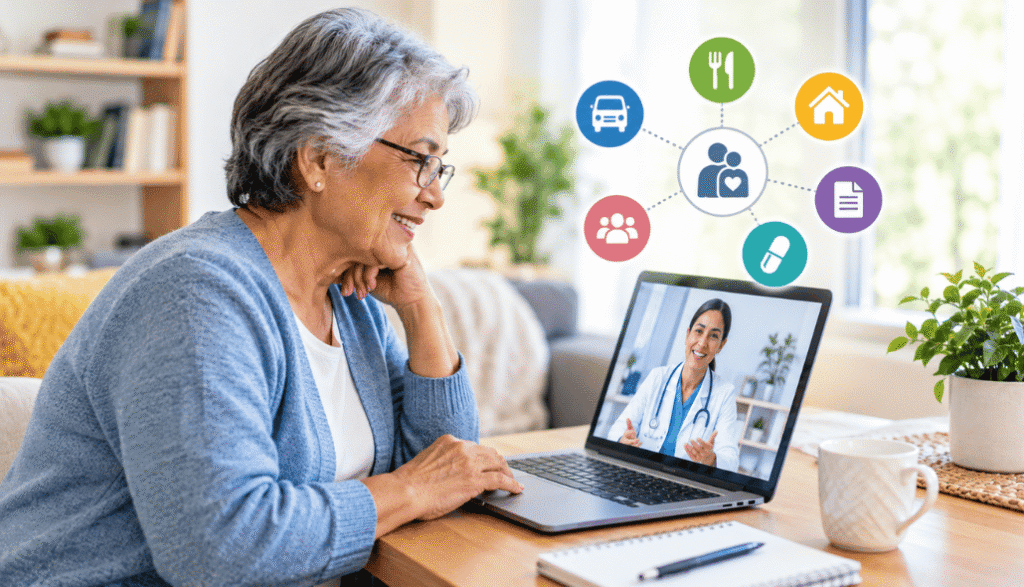
I have seen how staying healthy is not about doctor visits. For older adults everyday challenges like transportation, food access, housing concerns, paperwork, medication‑related questions or social isolation can make it more difficult to manage their health.
I understand that this is where Community Health Integration (CHI) may provide support for eligible Medicare patients. Community Health Integration (CHI) is designed to address health‑related social needs and help patients connect with appropriate community resources.
I have noticed that for seniors who have difficulty traveling to appointments or navigating services, telehealth may make access to Community Health Integration (CHI)-related support convenient.
I know that by requiring every conversation to happen in person, telehealth can provide a way for eligible patients to communicate with healthcare professionals from home using a phone, tablet or computer.
What Is Community Health Integration?
Community Health Integration is a Medicare service intended to help address certain health-related social needs that can affect a person’s ability to maintain their health and participate in their care.
These needs can extend beyond medical treatment.
Health and Everyday Challenges Can Be Connected
An older adult may have a medical condition but also face challenges such as:
- Difficulty finding transportation to appointments
- Limited access to nutritious food
- Housing or utility concerns
- Difficulty understanding or completing paperwork
- Challenges managing medications
- Limited social or community support
- Difficulty coordinating available services
These challenges can sometimes make it harder to follow a healthcare plan.
CHI may help eligible Medicare patients identify relevant needs and connect with appropriate community resources and support. The services available depend on individual circumstances, eligibility, and local resources.
How Telehealth Can Support Community Health Integration
Telehealth can reduce some of the practical barriers that make accessing support difficult for older adults.
1. Support From the Comfort of Home
Getting to a facility can be difficult.
Older adults may not drive. Older adults may depend on family members for transportation. Older adults may have mobility challenges.
With telehealth certain healthcare conversations can take place remotely when clinically appropriate. With telehealth the service is available through telehealth.
This can make it easier for eligible patients to discuss their health and everyday challenges. This can make it easier for patients without automatically requiring an in-person visit.
2. Easier Communication With Healthcare Professionals
Telehealth gives patients another way to talk to healthcare professionals and I have seen how it helps people feel more at ease.
During a Telehealth session a healthcare professional may talk about parts of daily life that can affect health, such as getting food, traveling, housing problems or available support and I notice how these details matter.
This wider conversation can help spot health‑related needs that might otherwise be missed and I appreciate the deeper understanding it brings.
3. Help Connecting With Community Resources
Knowing that a resource exists is one thing. Knowing how to access it can be another challenge.
Depending on eligibility and individual needs, CHI-related support may help connect patients with appropriate community organizations or services.
For example, an eligible patient experiencing transportation difficulties may be guided toward available transportation resources. Another patient may need help identifying community resources related to food access or social support.
CHI does not guarantee that a particular resource or service will be available. Resource availability can vary by location and individual circumstances.
Why Telehealth Can Be Especially Helpful for Older Adults
For some seniors, convenience can make a meaningful difference.
Telehealth may reduce the need for unnecessary travel and make certain conversations easier to access. It can also allow family caregivers or other appropriate participants to be involved when permitted and useful.
Less Travel
Travel can take time and may require transportation arrangements. Remote appointments can eliminate travel for services that are appropriate for telehealth.
More Convenient Communication
Some patients may find it easier to discuss everyday challenges from their familiar home environment.
A Broader View of Health
Good healthcare considers more than symptoms. Understanding barriers that affect daily life can help healthcare professionals better understand the circumstances surrounding a patient’s health needs.
Telehealth and CHI: What Seniors Should Know
Telehealth isn’t a replacement for every type of medical care. Some conditions, examinations, procedures, and services require in-person care.
Similarly, not every Medicare beneficiary automatically qualifies for CHI services. Eligibility and coverage depend on Medicare requirements and the patient’s circumstances.
If you’re interested in CHI, ask a healthcare professional whether the service may be appropriate for you and what options may be available.
Take the Next Step With Medcare
Getting support shouldn’t always mean navigating everything alone.
Medcare helps connect eligible Medicare patients with telehealth-based healthcare support and may help them connect with appropriate resources for certain health-related social needs.
If you or an eligible family member is interested in learning more about Community Health Integration, contact Medcare to discuss whether you may qualify.
Call Medcare at (800) 303-1766.
Eligibility, services, coverage, and availability vary. CHI-related support does not guarantee access to food, transportation, housing, utility assistance, or other community resources. This information is for educational purposes and is not a substitute for medical advice.