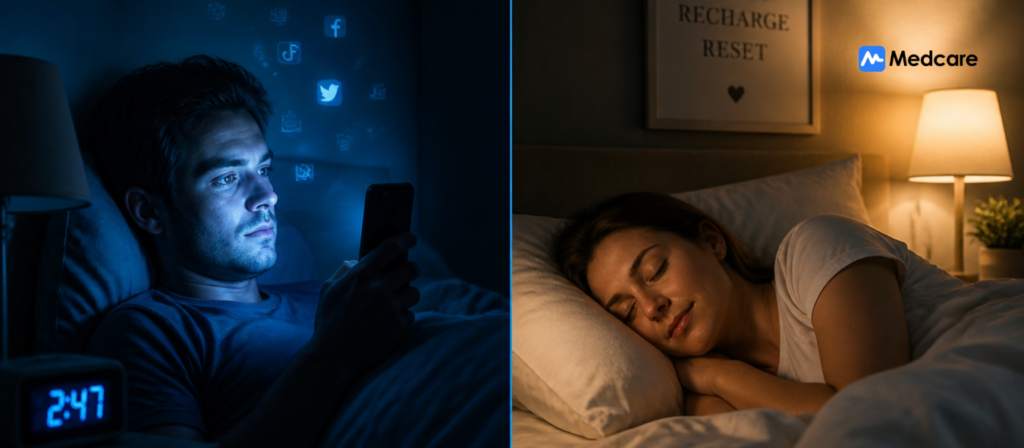
Screen Time and Sleep: What You Need to Know
In today’s digital world, screens are everywhere. From smartphones and tablets to TVs and laptops, many people spend hours each day looking at screens — often right before bedtime. While technology keeps us connected and entertained, too much screen time can negatively affect your sleep and overall health.
If you often struggle to fall asleep, wake up feeling tired, or experience restless nights, your evening screen habits may be part of the problem. Understanding the connection between screen time and sleep can help you make healthier choices and improve your nightly rest.
How Screen Time Affects Sleep
One of the biggest reasons screens impact sleep is because of blue light exposure. Electronic devices emit blue light, which can interfere with your body’s natural sleep-wake cycle, also known as the circadian rhythm.
Normally, your body produces a hormone called melatonin in the evening. Melatonin helps signal that it’s time to sleep. However, exposure to blue light from screens can reduce melatonin production, making it harder to fall asleep naturally.
Common Sleep Problems Linked to Screen Time
Excessive screen use before bed may lead to:
- Difficulty falling asleep
- Poor sleep quality
- Frequent nighttime waking
- Shorter sleep duration
- Feeling tired during the day
- Increased stress and irritability
Research also shows that late-night scrolling on social media or watching videos can keep the brain mentally active, making relaxation more difficult before bedtime.
Why Sleep Matters for Overall Health
Sleep is essential for both physical and mental well-being. Poor sleep over time can increase the risk of several health problems, including:
1. Weakened Immune System
Lack of quality sleep may reduce the body’s ability to fight infections and illnesses.
2. Increased Stress and Anxiety
Poor sleep can affect mood, emotional balance, and mental health. Many people notice increased anxiety or irritability after restless nights.
3. Weight Gain and Low Energy
Insufficient sleep may affect metabolism, appetite control, and energy levels, making it harder to maintain a healthy lifestyle.
4. Reduced Focus and Productivity
Sleep plays a major role in memory, concentration, and decision-making. Too much screen time at night may impact your daily performance at work or school.
How Much Screen Time Is Too Much?
There is no perfect number that applies to everyone, but health experts generally recommend limiting screen use at least 1–2 hours before bedtime.
The problem is not only the amount of time spent on devices but also the type of content being consumed. Watching stressful news, engaging in work emails, or endlessly scrolling social media can overstimulate the brain and delay sleep.
Children, teenagers, adults, and older adults can all experience sleep disruption from excessive screen exposure.
Signs Your Screen Habits May Be Hurting Your Sleep
You may need to change your screen routine if you experience:
- Trouble sleeping regularly
- Using your phone in bed every night
- Feeling sleepy during the day
- Waking up tired despite enough hours in bed
- Checking devices immediately after waking up
- Frequent nighttime phone use
Recognizing these habits is the first step toward better sleep hygiene.
Tips to Reduce Screen Time Before Bed
Improving sleep doesn’t mean giving up technology completely. Small changes can make a big difference.
Create a Screen-Free Bedtime Routine
Try replacing screen time with relaxing activities such as:
- Reading a book
- Listening to calming music
- Gentle stretching
- Meditation or deep breathing
- Talking with family
These habits help your body and mind prepare for restful sleep.
Use Blue Light Filters
Many smartphones and computers now offer “Night Mode” or blue light filters. While these features may help reduce eye strain, limiting screen use altogether before bed is still the best option.
Keep Devices Out of the Bedroom
Keeping phones, tablets, and laptops away from the bed can reduce distractions and prevent late-night scrolling.
Set a Consistent Sleep Schedule
Going to bed and waking up at the same time each day helps regulate your body clock and improve sleep quality.
Avoid Stimulating Content at Night
Stressful or emotionally intense content can keep the brain alert. Try to avoid work-related tasks, gaming, or social media arguments close to bedtime.
Screen Time and Children’s Sleep
Children and teenagers are especially sensitive to the effects of screen exposure. Excessive screen use can lead to shorter sleep duration, poor concentration, mood changes, and daytime fatigue.
Parents can support healthier sleep by:
- Setting screen time limits
- Encouraging device-free bedrooms
- Creating family bedtime routines
- Promoting outdoor activities during the day
Healthy digital habits early in life can support long-term wellness.
When to Seek Professional Help
Occasional sleep issues are common, but ongoing sleep problems should not be ignored. If poor sleep continues despite reducing screen time, it may be helpful to speak with a healthcare professional.
Chronic sleep deprivation can affect heart health, mental well-being, and overall quality of life.
Technology is a major part of modern life, but balancing screen time is important for healthy sleep. Reducing screen exposure before bed, building better nighttime habits, and prioritizing quality rest can improve both physical and mental health.
Even small lifestyle changes can help you sleep better, feel more energized, and support long-term wellness.
At Medcare, we believe better sleep is an important part of better health. If you’re experiencing ongoing sleep issues, fatigue, or wellness concerns, our healthcare professionals are here to help. Contact Medcare today to learn more about healthy lifestyle habits and personalized care solutions.