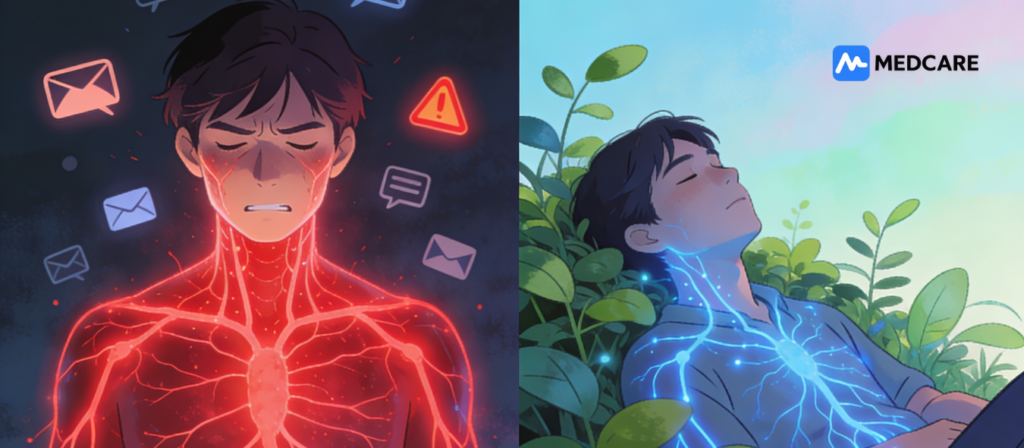
Your body has a system that keeps you safe. When you are in danger it gets ready to help you react fast. This is called “fight or flight”. If this system stays on for too long you might feel worried, tired and stressed.
If you always feel like you are waiting for something to happen your body might be too alert. The good news is that you can fix this. You just need to know what makes you feel this way.
Let’s look at it in a way.
What Does “Nervous System Overdrive” Mean?
Your nervous system has two main modes:
- Sympathetic (fight-or-flight): Activated during stress
- Parasympathetic (rest-and-digest): Activated during relaxation
When your body spends too much time in the sympathetic state, it leads to chronic stress. This can impact your sleep, digestion, mood, and overall health.
Signs Your Nervous System Is Overstimulated
Before we dive into the causes, here are common symptoms:
- Constant anxiety or restlessness
- Trouble sleeping or waking up tired
- Rapid heartbeat or shallow breathing
- Digestive issues
- Brain fog and poor focus
- Feeling overwhelmed easily
If these sound familiar, your nervous system may need support.
12 Things That Keep Your Nervous System Stuck in Overdrive
1. Chronic Stress
Work pressure, financial worries or personal struggles that go on for a time keep your body on high alert. Unlike short-term stress, chronic stress does not give your body a chance to relax and recover.
2. Poor Sleep Quality
Sleep that is not deep and restful does not help your system reset. Even if you sleep for hours, poor sleep quality can leave your body feeling stressed.
3. Excess Caffeine Intake
Drinking a lot of coffee or energy drinks keeps your nervous system stimulated. This increases your heart rate and cortisol levels making it hard to relax.
4. Constant Screen Exposure
Using your phone much, especially at night, overstimulates your brain. This disrupts the production of melatonin, which affects your sleep and relaxation.
5. Unresolved Emotional Trauma
Past traumatic experiences can keep your body in a mode. This happens even when there is no danger.
6. Overthinking and Anxiety
When you overthink your mind keeps racing. This signals your body that something is wrong even if it’s scenarios that you imagine.
7. Poor Diet and Nutrient Deficiencies
If you do not eat food that has magnesium and B vitamins and omega-3s it can hurt your system.
8. Lack of Physical Activity
When you move your body it helps get rid of stress that has built up. If you sit around all the time your body will stay tense.
9. Overworking Without Breaks
When you work for a time without taking a break your brain stays busy all the time and does not get a chance to rest.
10. Social Isolation
People need to be around people. If you are alone all the time you will have stress and feel sad.
11. Negative News Consumption
If you always watch or read news that’s sad or scary your brain will think the world is a bad place.
12. Irregular Daily Routine
If you do things at times every day your body will get confused and you will feel stressed and tired.
How to Calm Your Nervous System Naturally
The key is not to make stress go away completely. But to help your body get calm again easily.
1. Practice Deep Breathing
When you breathe slowly and control your body feels safe. Try breathing in for 4 seconds and breathing out for 6 seconds.
2. Improve Sleep Hygiene
- Keep a sleep schedule every day
- Do not look at screens before going to bed
- Do something relaxing before sleeping
3. Reduce Stimulants
Try to drink coffee especially in the afternoon and evening.
4. Move Your Body Every Day
Things like walking, stretching or yoga can help get rid of tension and make you feel better. Move your body daily to calm your system. Your nervous system will thank you for moving your body.
5. Eat a Nervous-System-Friendly Diet
Include foods that have:
- Magnesium (like greens and nuts)
- Omega-3s (like fish and seeds)
- B vitamins (like grains and eggs)
6. Take Short Breaks During The Day
Taking breaks can help your brain feel fresh and prevent getting too tired.
7. Limit Negative Input
Try to avoid stuff and focus on things that are positive or not too serious.
8. Build Supportive Connections
Talking to friends or family can really calm your nerves.
When Should You Seek Help?
If your symptoms are severe or persistent-such as constant anxiety, panic attacks, or chronic fatigue-it may be time to consult a healthcare professional. Therapy, counseling, or medical support can make a big difference.
Your body is trying to keep you safe. Sometimes it can get a bit mixed up. This happens a lot in today’s world.
Here are some easy steps you can take:
- Find out what is stressing you out
- Make a small changes to your daily routine
You can start by taking deep breaths, getting enough rest and letting your body know that it’s okay. This will help your body get back to normal. Your nervous system is just trying to protect you.
At Medcare, we’re here to help you take control of your health-mind and body.
Explore our expert-backed wellness guides and start your journey toward a calmer, healthier life today.