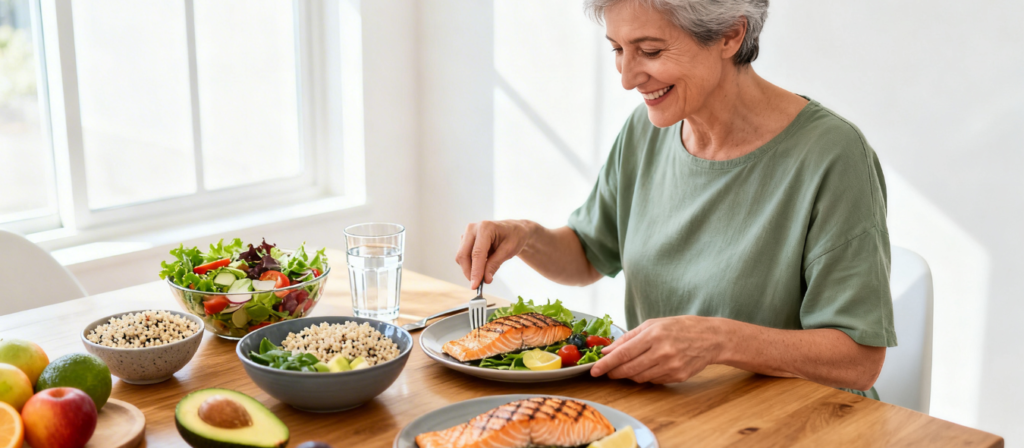
Healthy eating can seem hard. There are many diet fads, mixed messages and strict food plans out there. Many people feel stressed before they even begin. The truth is, eating healthy isn’t about cutting out foods or being too strict. It’s about giving your body the foods it needs and finding a balance in your daily life.
This guide will help make healthy eating simple and easy to follow. We’ll break it down into everyday steps that you can actually do. No crazy diets or confusing rules.
Why Healthy Eating Matters
Your body needs food to give you energy, fix things when you’re hurt and keep you healthy. What you eat has an impact on how you feel right now and how healthy you’ll be later.
Eating healthy can help with:
- Keeping a weight
- Having energy
- Keeping your heart healthy
- Lowering your chances of getting diabetes and other serious diseases
- Making your immune system stronger
- Thinking clearly and feeling better
As you get older like when you’re, over 50 or 65 good nutrition becomes even more important. Eating right helps keep your bones strong, your muscles powerful and your body working well.
The Basic Principles of Healthy Eating
Healthy eating is not about perfection. It’s about consistency and balance.
1. Focus on Whole Foods
Whole foods are basically foods that are not messed with much and are pretty much the way they are found in nature.
Examples include:
- Fruits and vegetables
- Whole grains like brown rice and oats and quinoa
- Lean proteins such as fish and chicken and beans
- Nuts and seeds
- Healthy fats, like olive oil and avocado
When you are making meals try to use foods as the main thing. Whole foods should be what you build most of your meals around, like grains and lean proteins and fresh fruits and vegetables.
2. Balance Your Plate
A simple rule that many nutrition experts suggest is to use the plate method.
A healthy plate normally has:
- Half vegetables or fruits
- A quarter lean protein
- A quarter whole grains or healthy carbs
This balance helps control blood sugar levels, keeps you full for a time and gives you essential nutrients.
3. Avoid Ultra-Processed Foods
Highly processed foods often contain excess sugar, salt, unhealthy fats, and artificial ingredients.
Examples include:
- Sugary drinks
- Packaged snacks
- Fast food
- Processed meats
- Frozen meals high in sodium
You don’t have to eliminate them completely, but limiting them significantly improves your overall diet.
How to Build Healthy Meals in Real Life
Many people think healthy eating requires complicated recipes. In reality, simple meals are often the healthiest.
Here are a few easy examples:
Breakfast Ideas
Healthy breakfasts should provide protein, fiber, and healthy fats.
Examples:
- Oatmeal with berries and nuts
- Greek yogurt with fruit and granola
- Eggs with whole-grain toast and avocado
- Smoothie with spinach, banana, protein, and almond milk
Lunch Ideas
Lunch should keep your energy stable throughout the afternoon.
Examples:
- Grilled chicken salad with olive oil dressing
- Whole-grain wrap with turkey and vegetables
- Quinoa bowl with roasted vegetables and chickpeas
- Tuna salad with mixed greens
Dinner Ideas
Dinner can be balanced but still satisfying.
Examples:
- Baked salmon with vegetables and brown rice
- Grilled chicken with roasted sweet potatoes
- Stir-fried vegetables with tofu and quinoa
- Lean beef with steamed broccoli and whole grains
Smart Snacking Without Overeating
Snacks are really good at helping us keep our energy up especially when we have a time between meals.
Some good snack choices are:
- Apple with peanut butter
- Greek yogurt
- A handful of almonds or walnuts
- Cottage cheese with fruit
- Carrots with hummus
We should try to stay from snacks that are mostly sugar or refined carbs. Snacks like these are not good, for us. Can make our energy levels go down. It is better to eat snacks that’re healthy like the snacks I mentioned before to keep our energy levels up.
Healthy Eating Tips That Actually Work
Most people fail with nutrition plans because they try to change everything at once. Small sustainable habits work much better.
1. Plan Your Meals
Meal planning helps you avoid unhealthy last-minute choices.
You don’t need a complicated system. Even planning just 3–4 dinners for the week can make a big difference.
2. Cook More at Home
Home-cooked meals typically contain less sugar, salt, and unhealthy fats compared to restaurant meals.
Cooking doesn’t need to be time-consuming. Simple meals with a few ingredients can be both healthy and delicious.
3. Stay Hydrated
Water plays a major role in digestion, metabolism, and overall health.
Many people mistake thirst for hunger. Drinking enough water can naturally help control appetite.
A common guideline is about 6–8 glasses of water per day, though needs vary by person.
4. Practice Portion Awareness
Even healthy foods can lead to excess calories if portions are too large.
Use smaller plates, eat slowly, and stop when you feel satisfied rather than completely full.
5. Follow the 80/20 Rule
Healthy eating doesn’t mean giving up your favorite foods forever.
A practical approach is the 80/20 rule:
- 80% nutritious whole foods
- 20% flexible or treat foods
This balance makes healthy eating sustainable long term.
Healthy Eating for Long-Term Wellness
Healthy eating is not about short term diets. It is about creating habits that help your body for years.
Focus, on adding foods to your daily routine instead of cutting out foods.
These small changes add up over time. Make a big difference to your health, energy and overall well-being.
The best eating plan is one that you can easily follow in your life.
Healthy eating in life is simple when you focus on balance and whole foods and sustainable habits. You do not need diet plans or strict restrictions.
Making changes can make a big difference. Eating vegetables is a good start. Cooking at home is also an idea. Choosing foods is important too.
These small consistent changes, like eating vegetables and cooking at home and choosing whole foods can really improve your health over time. Healthy eating is, about balance and whole foods and making healthy eating a part of your daily life.